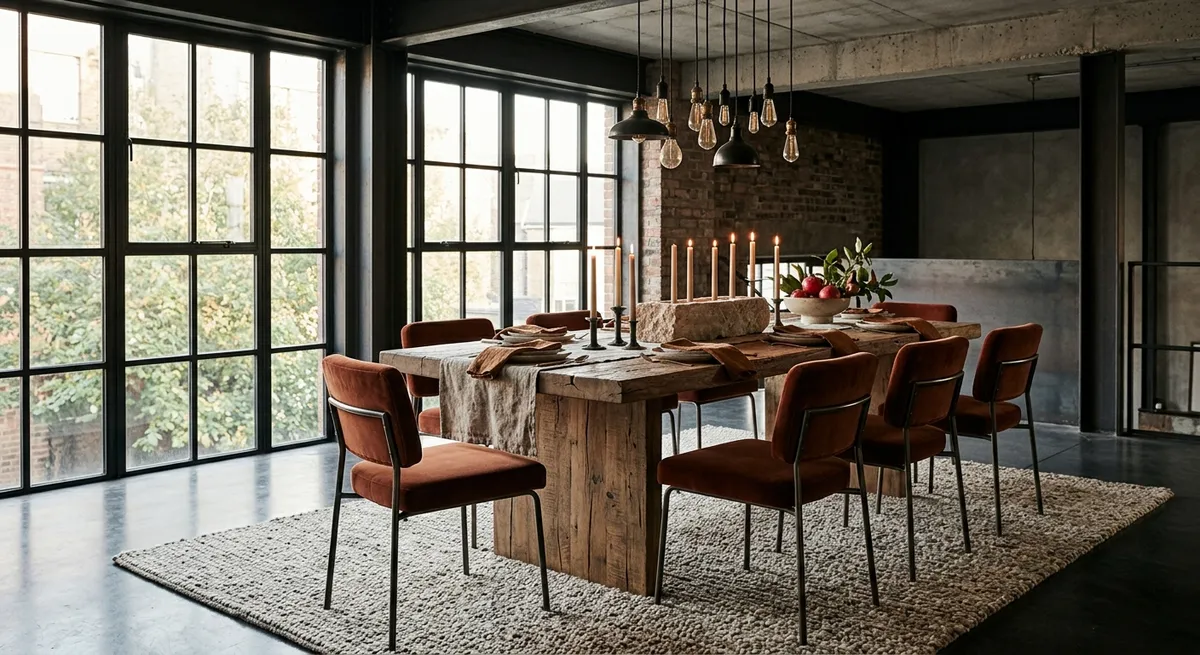
Industrial style has a reputation problem. Metal, glass and raw surfaces look sharp in photos, but they can feel like a loft showroom when you're trying to eat dinner. The fix doesn't require a renovation. It requires a handful of softer materials and a change in how you light the room.
A good template comes from Jennifer Aniston's Beverly Hills dining room, designed by Stephen Shadley and covered by Homes & Gardens. The room pairs exposed bulbs and sleek windows, both classic industrial signals, with natural materials that make the space cocooning rather than cold. Below is how to borrow that balance in your own home.
Start with the principle: let industrial be the frame, not the whole picture
The Aniston dining room doesn't hide its industrial bones. Per Homes & Gardens, the exposed bulbs and sleek windows stay front and center. What changes the mood is what sits alongside them. Think of the hard elements as the structure, and the soft ones as the part you actually live in.
That's a useful rule when you're editing your own room. You don't need to remove the metal or the glass. You need enough warm, tactile material around them that the room doesn't read as all edges.
Add wood where your hands and elbows go
Wood is the quickest way to take the chill off metal and glass. The dining table is the obvious place, since it's the surface you touch most. If a new table isn't in the budget, work in smaller pieces:
- A wooden serving board or tray as a table centerpiece base
- Wood-framed mirrors or art on a hard wall
- Wooden chairs or a bench mixed in with metal-legged pieces
The goal is to make sure wood appears at more than one height in the room, not just on the floor.
Bring in stone for weight and calm
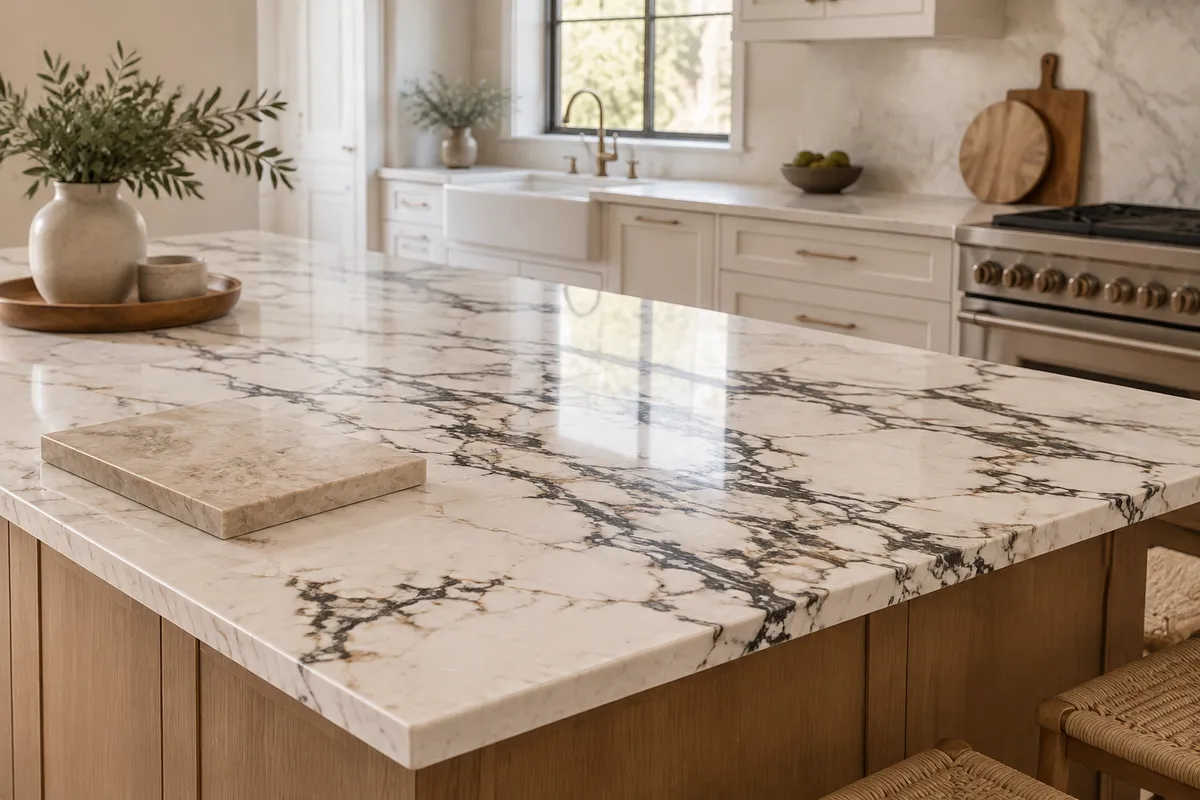
Stone is another natural material highlighted as a way to balance raw industrial finishes. It adds visual weight without the sterile feel of polished metal. You can use it on a large scale, such as a tabletop, or on a small one: a stone bowl, candle holders, or coasters. Even modest pieces give the eye something organic to land on.
Put a rug under the table
Hard floors and hard materials create echo, both visually and acoustically. A rug is one of the simplest ways to soften the whole scene. For a dining room, choose one large enough that the chairs stay on it when pulled out. That's a practical rule of thumb rather than a rule from the Aniston room, but it keeps the rug from looking like an afterthought.
Pick a texture with some depth, like wool or a woven pile, over something flat and slick.
Use velvet for the moody part
Velvet is on the list of softening materials, and it pairs well with a darker, moodier palette. You don't need to reupholster anything:
- Swap in velvet seat cushions or chair pads.
- Hang velvet curtains if your windows are bare and sleek.
- Add a single velvet-covered bench or chair as an accent.
Deep tones feel richer in velvet because the fabric absorbs and reflects light unevenly, which suits a cocooning room.
Fix the lighting before anything else
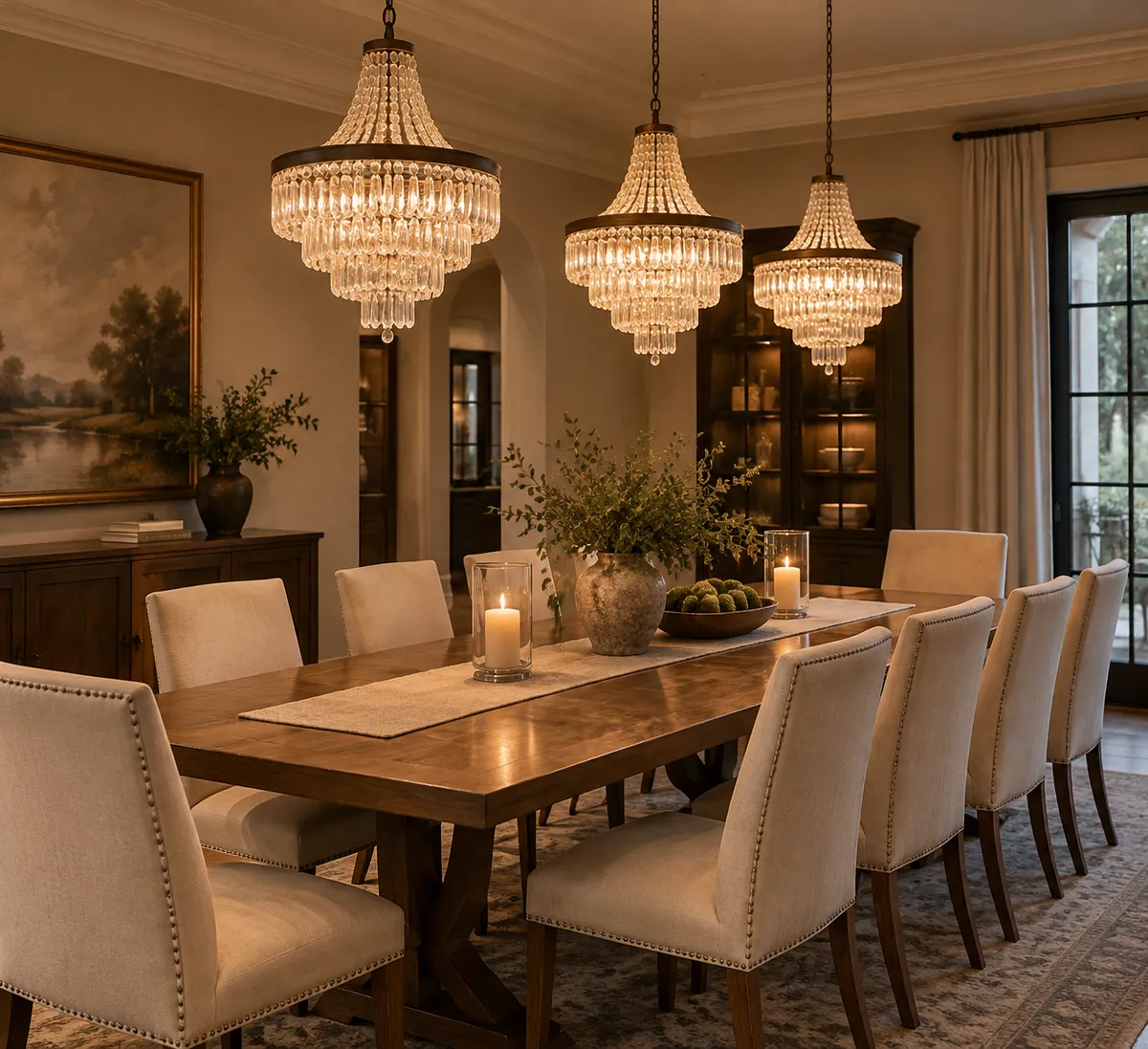
If you do only one thing, do this. Exposed bulbs are a hallmark of the Aniston room, but the lesson is in how warm light and candles work with them. Harsh, cool light makes industrial interiors feel clinical.
Try these quick changes:
- Choose warm-toned bulbs for bare-bulb fixtures.
- Put fixtures on a dimmer if you can, so you can lower the light for dinner.
- Add candles to the table. They bring flicker and warmth that no fixture can.
Candles are also the cheapest item on this list, which makes them a good first test of whether the warmer look suits you.
Why this look fits the season
Per the reporting, fall is approaching and 2026 design is moving away from cool, polished minimalism toward interiors that feel cozy, textured and lived-in. A dining room is a natural place to start because it's where texture matters most: you linger there, and the table gets used for gatherings.
Celebrity homes keep driving decorating ideas for a reason. They show a look fully resolved, and you can pull it apart into pieces you can actually afford.
A budget-friendly order of operations
If you're working in stages, this sequence gives you the biggest change early:
- Lighting and candles. Warm bulbs, a dimmer, a few candles.
- A rug. The largest soft surface you can add.
- Velvet. Cushions or curtains first.
- Wood and stone accents. Boards, bowls, frames, coasters.
- Larger swaps. A wooden table or new chairs, when budget allows.
The takeaway
Don't fight your industrial elements. Keep the exposed bulbs and the sleek windows, then surround them with wood, stone, a rug, velvet and candlelight. Tonight, swap one cold bulb for a warm one, light a candle at the table, and see how much the room changes before you spend anything else.