BuzzFeed Shopping recently published a roundup of 28 affordable Target items meant to help you build a dream bedroom without a big spend. The full list lives on BuzzFeed, and the specific products aren't something we can vouch for here. What we can do is give you the part that lasts longer than any product list: a plan for spending a small budget in the right order, so a Target run (or any budget retailer run) actually changes how your room looks and feels.
By the end, you'll know what to buy first, what to skip, and how to keep the whole thing cheap, including a few eco-friendly habits that save money too.
Start With a Price Cap, Not a Shopping Cart
The fastest way to overspend on a room refresh is to wander the aisles with no number in mind. Pick a ceiling before you go. Something like $100 is a useful target for a single-room refresh, and it forces real choices.
Then split it roughly into thirds: one share for bedding, one for lighting, one for everything else (storage, small decor, finishing touches). You don't need to follow it to the penny. It simply stops you from blowing the whole budget on three throw pillows.
Spend First on Bedding
The bed is the biggest visual surface in the room, and it's also where you spend the most time. Better bedding changes both the look and the comfort level at once.
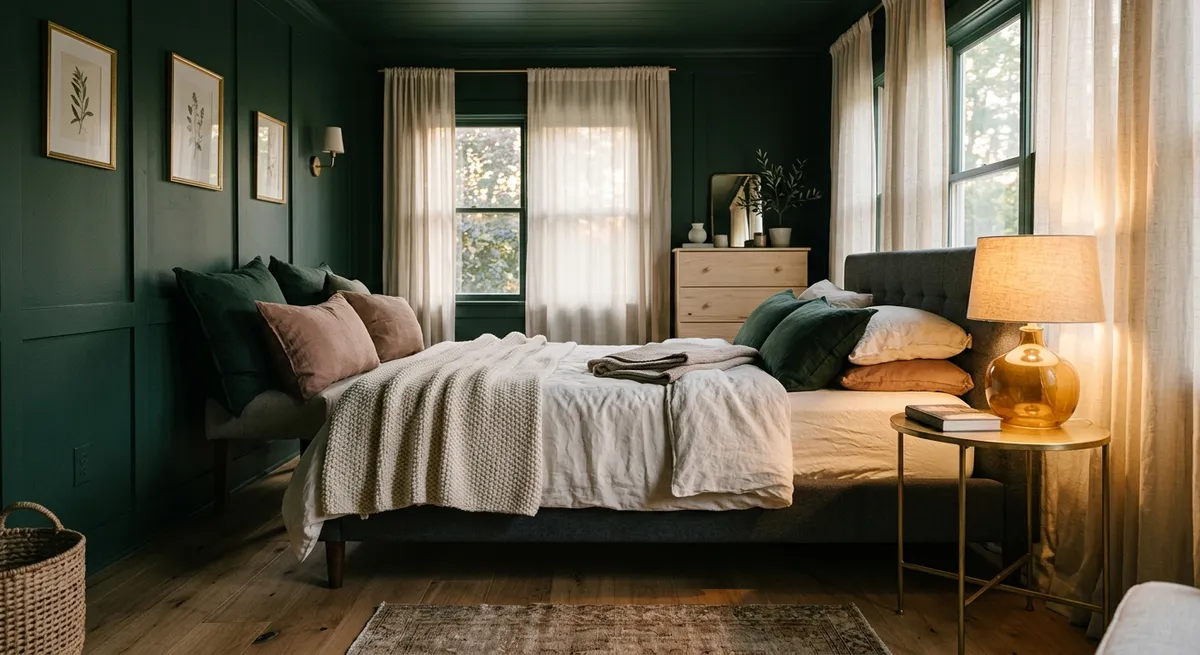
- Pick a palette of two or three colors. One main color, one neutral, one accent. This is what makes budget pieces look intentional rather than random.
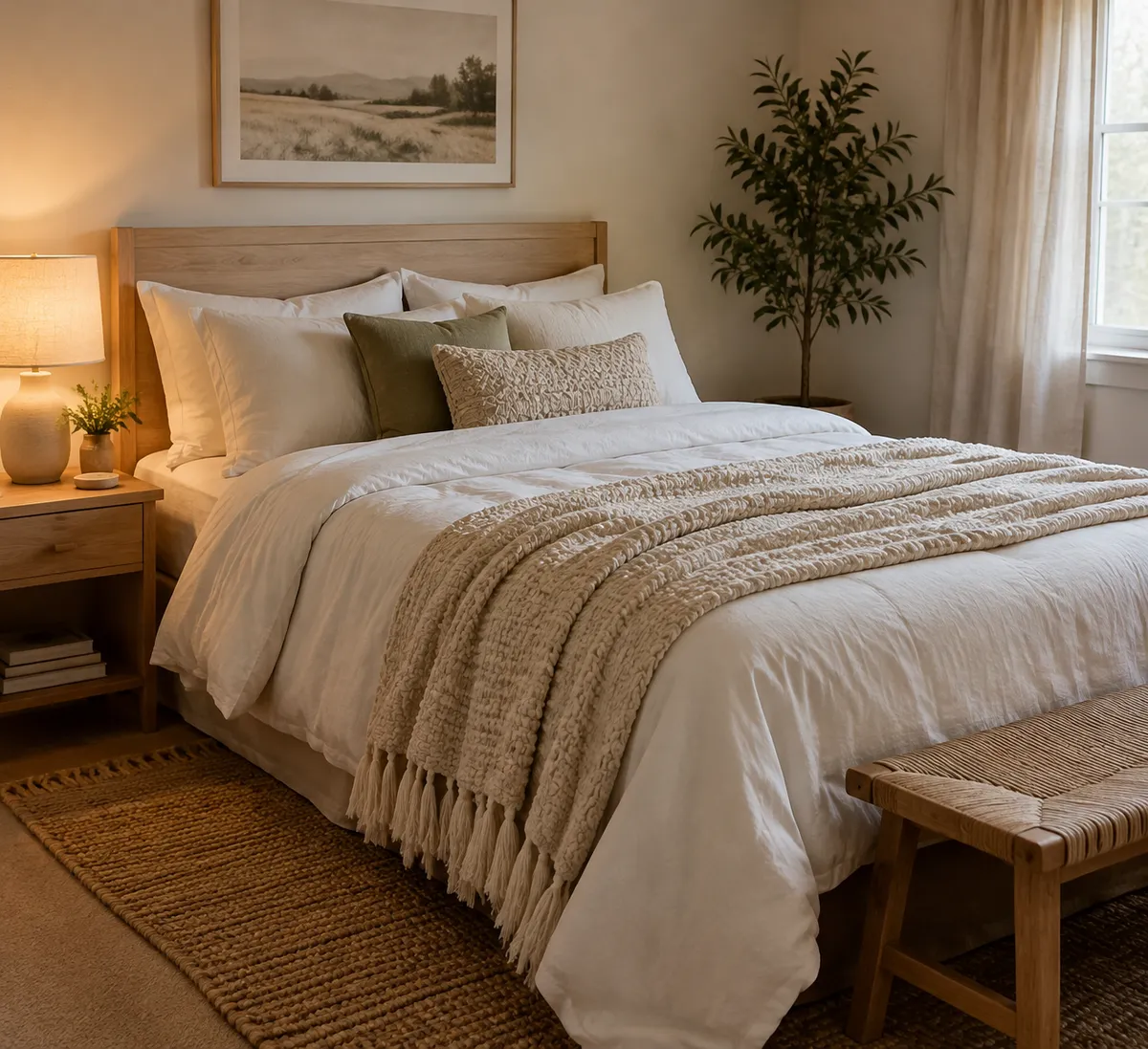
- Layer instead of buying more. A duvet cover, a throw blanket at the foot of the bed, and two pillows in a contrasting texture look far richer than a single expensive set.
- Mix textures. Linen-look, knit, and smooth cotton next to each other read as "designed," even when each piece is inexpensive.
Fix the Lighting Next
Harsh overhead light is the quiet enemy of a cozy bedroom. Swapping it for softer, lower sources is one of the cheapest upgrades you can make.
- Add a lamp on each side of the bed, or at least one on your main nightstand.
- Use warm-toned bulbs. Check the box for a warmer color temperature rather than the cool white that makes a room feel like an office.
- Consider a string of lights or a small plug-in light for a corner that feels dead.
Turn the overhead off for a week and live with lamps only. If the room feels better, you've confirmed where your money should go.
Add Storage That Hides Clutter
A budget bedroom looks expensive when the floor and surfaces are clear. Clutter is what makes even nice things look cheap.
- Use baskets or bins under the bed and on closet shelves.
- Add a small tray on the nightstand to corral the daily pile of chargers, lip balm, and glasses.
- Use hooks on the back of the door or wall for bags, robes, and scarves.
Storage is also the best category for renters and small-space dwellers, since none of it requires drilling or permanent changes (hooks with removable adhesive are an easy option).
Finish With a Few Small Swaps
Once bedding, lighting, and storage are handled, a little decor goes a long way. Resist filling every surface.
- One piece of art or a mirror over the bed or dresser gives the eye somewhere to land.
- A plant, real or faux, adds life to a corner or nightstand.
- A rug under the edge of the bed warms the floor and anchors the layout, if there's budget left.
Three or four intentional items beat fifteen small ones every time.
Make It Greener (and Cheaper)
Since the angle here is budget, the eco-friendly choices tend to line up with the thrifty ones.
- Shop your own home first. Move a lamp, a basket, or a frame from another room before buying anything new.
- Reuse containers and jars as organizers for small items on a dresser.
- Buy fewer, better pieces. Bedding you love is bedding you keep for years instead of replacing.
- Check secondhand for frames and nightstands, then buy new only for items you'd rather not buy used, like pillows.
Use a Roundup the Smart Way
A list like BuzzFeed's 28-item roundup is best treated as inspiration, not a checklist. Skim it, pick the three or four items that fit your palette and your cap, and ignore the rest. Check current prices and reviews at the store before buying, since prices and availability change.
Before you open a single tab, write down your budget, your three colors, and the one thing about your bedroom that bugs you most. Buy for that problem first.