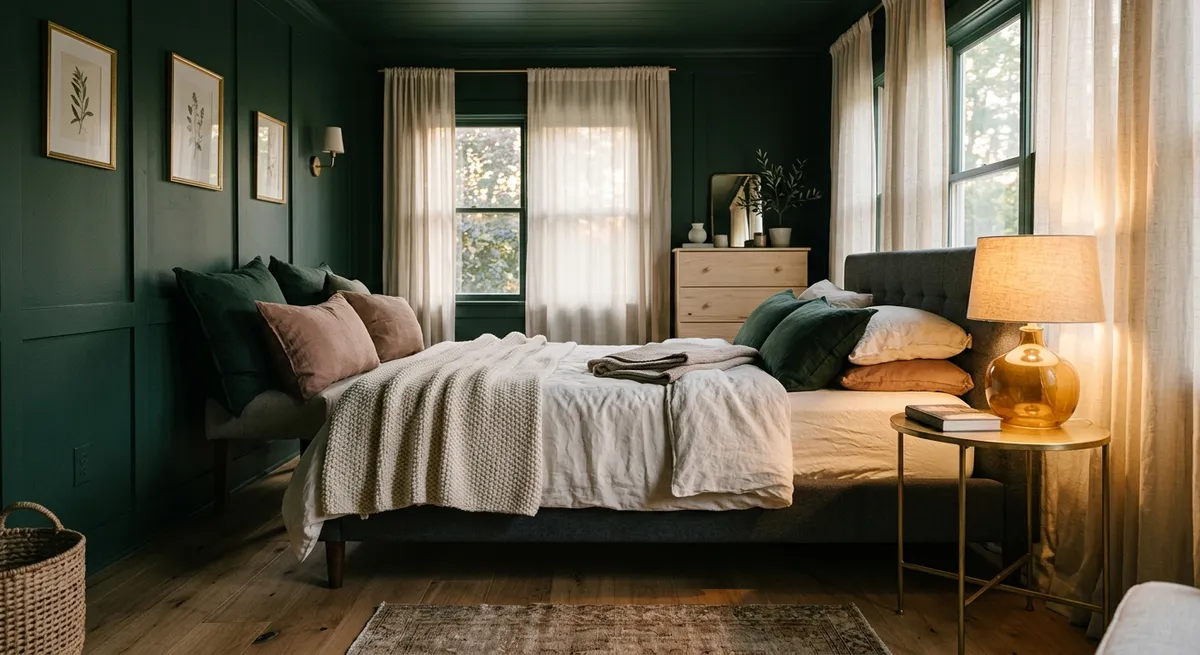
Dark walls scare a lot of people. The fear is reasonable: pick the wrong shade, skip the supporting cast, and your bedroom feels like a basement. But Good Housekeeping's round-up of 20 dark bedroom ideas, built on designer advice, makes a clear case that deep colors can read as restful. The recipe is consistent: pair moody color with texture, contrast, warm lighting and natural materials.
Here's how to use that recipe, whether you're painting everything or just one wall.
Pick a Dark Color That Suits You
The round-up covers a wide range of moody shades, so you have options beyond black:
- Plum and moody purple: richer and more personal than gray.
- Deep green: a favorite in the list, with a specific pairing tip below.
- Navy and layered blues: the list suggests both embracing navy and layering different shades of blue.
- Warm brown: a cozier route than black.
- Black, dark gray, or both: the list includes pairing black with dark gray, going black on black, and classic black and white.
If you're nervous, brown, navy and plum are the shades that sound least like a cave.
Decide How Much Wall to Commit To
The list offers three levels of commitment.
Start with one wall
Painting an accent wall is on the list, and it's the easiest test. Live with it for a few weeks before committing the whole room.
Go all in on the walls
Full coverage is where the cocooning effect comes from. Black on black and black paired with dark gray both lean into that wrapped-up feeling.
Drench the ceiling
The list also suggests painting the ceiling gray. Carrying color overhead is a way to make the room feel finished rather than boxed in by a stark white lid.
Add Texture So Dark Doesn't Go Flat
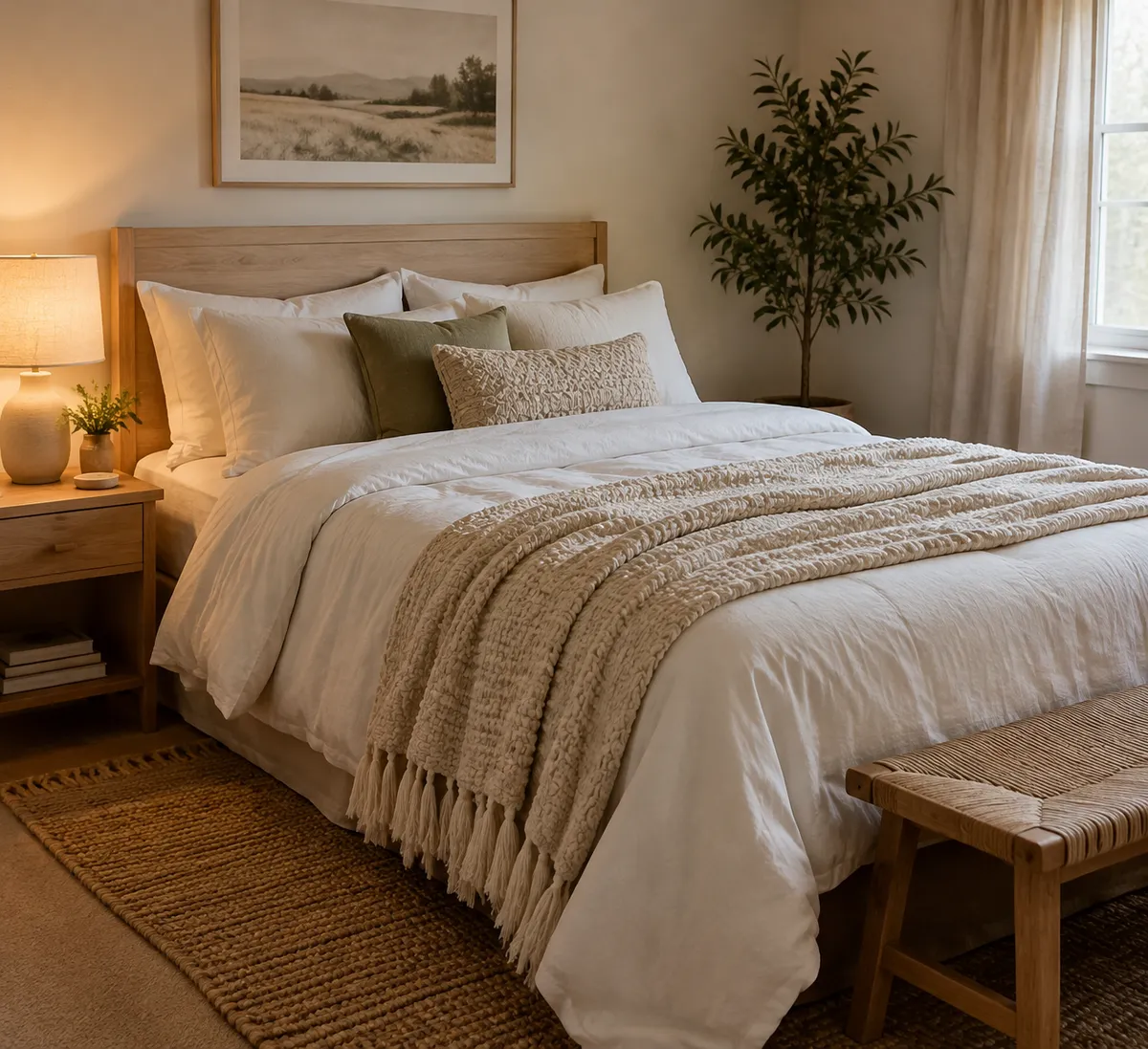
Layering different textures is its own entry in the round-up, and it's the common thread through the whole piece. Dark paint absorbs light, so surface variety does the work that brightness usually does. Think of a knit throw over linen sheets, a woven headboard, or a wood nightstand against a matte wall.
Board-and-batten is another idea on the list. Paneling adds dimension and shadow play to a dark wall, so it looks designed rather than just dim.
Use Contrast to Keep It Light
Designers in the round-up repeatedly balance dark walls with lighter pieces:
- White furniture: creates crisp contrast against deep walls.
- Light and airy curtains: softens the room and keeps it from feeling heavy.
- Cheerful colors mixed with moody ones: keeps the palette from turning somber.
- Black furniture: the opposite move, which works when you want a graphic, grounded look.
- Classic black and white: a high-contrast scheme that stays timeless.
The takeaway: choose your balance deliberately. Either lighten the furnishings, or go fully dark and use texture to carry the room.
Bring in Natural Materials and Pattern
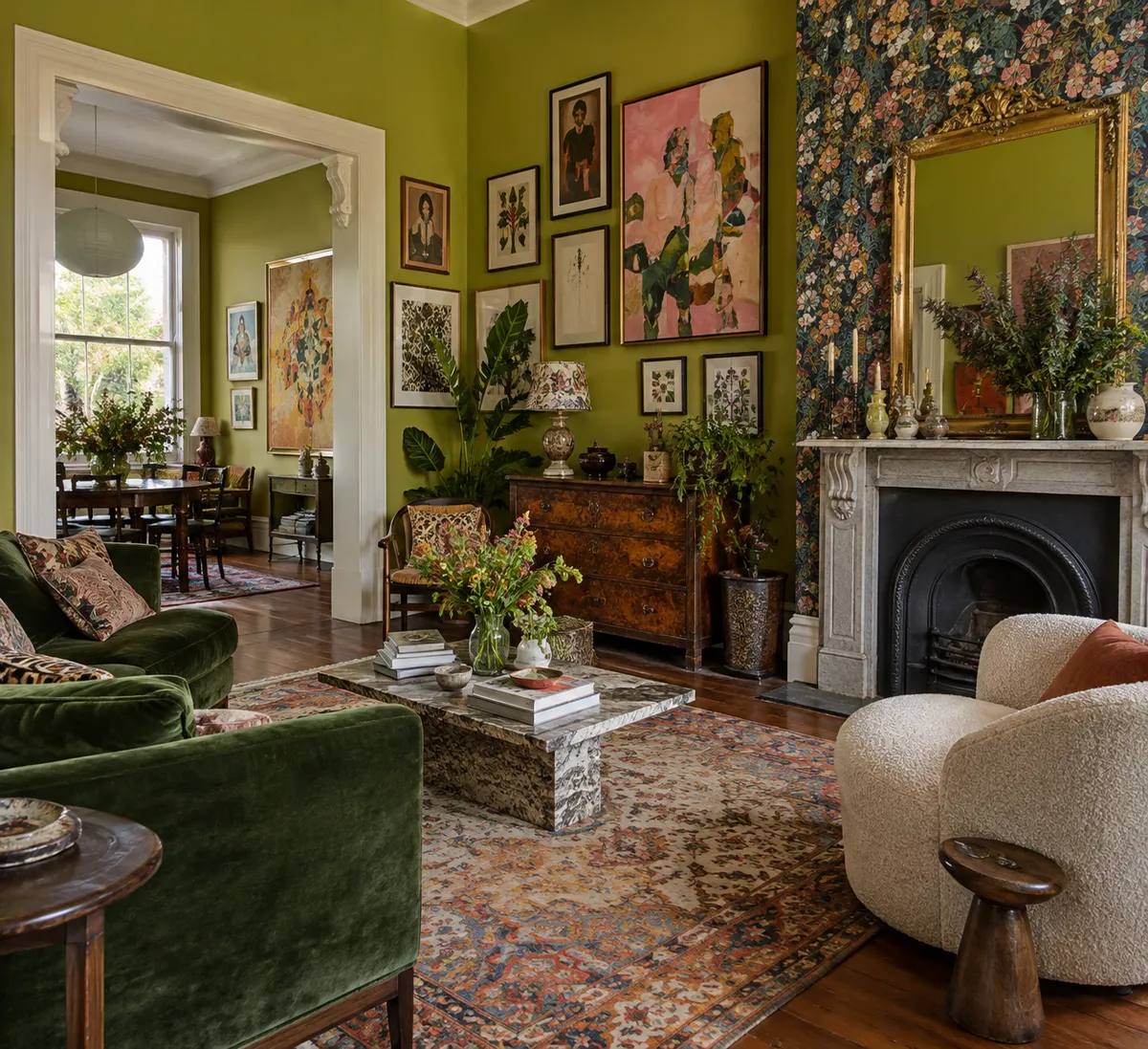
The list suggests mixing dark green with natural materials. Wood, rattan, wool and linen warm up a deep color and make it feel organic rather than stark. A patterned wallpaper is another route if you want depth without painting every surface a single flat tone.
Don't Forget Warm Lighting
The round-up's central advice is deep colors, layered textures and warm lighting working together. Lighting is the piece people forget. Dark walls need softer, warmer light sources, such as lamps at bedside height, instead of a single harsh overhead fixture. The color is only half the mood.
Try It in a Kids' Room, Too
The list even includes experimenting in a kids' room, which shows dark color isn't reserved for the primary suite. It's a good place to try a bolder shade with playful accessories.
Renter and Low-Commitment Options
The round-up is about paint and wallpaper, so a renter has to adapt. Based on its logic, here are lower-stakes ways to borrow the look (our take, not the list's):
- Check your lease before painting, and use the accent-wall idea if you get approval.
- Get the dark effect from bedding, curtains and furniture instead of walls.
- Add textures and warm lamps, which cost little and are easy to take with you.
The One Move to Make This Weekend
Pick a single wall, choose a deep shade like plum, navy or green, and layer in two textures and one warm lamp before you judge it. If it feels calm at night, extend the color. If not, you've only spent one wall's worth of paint.