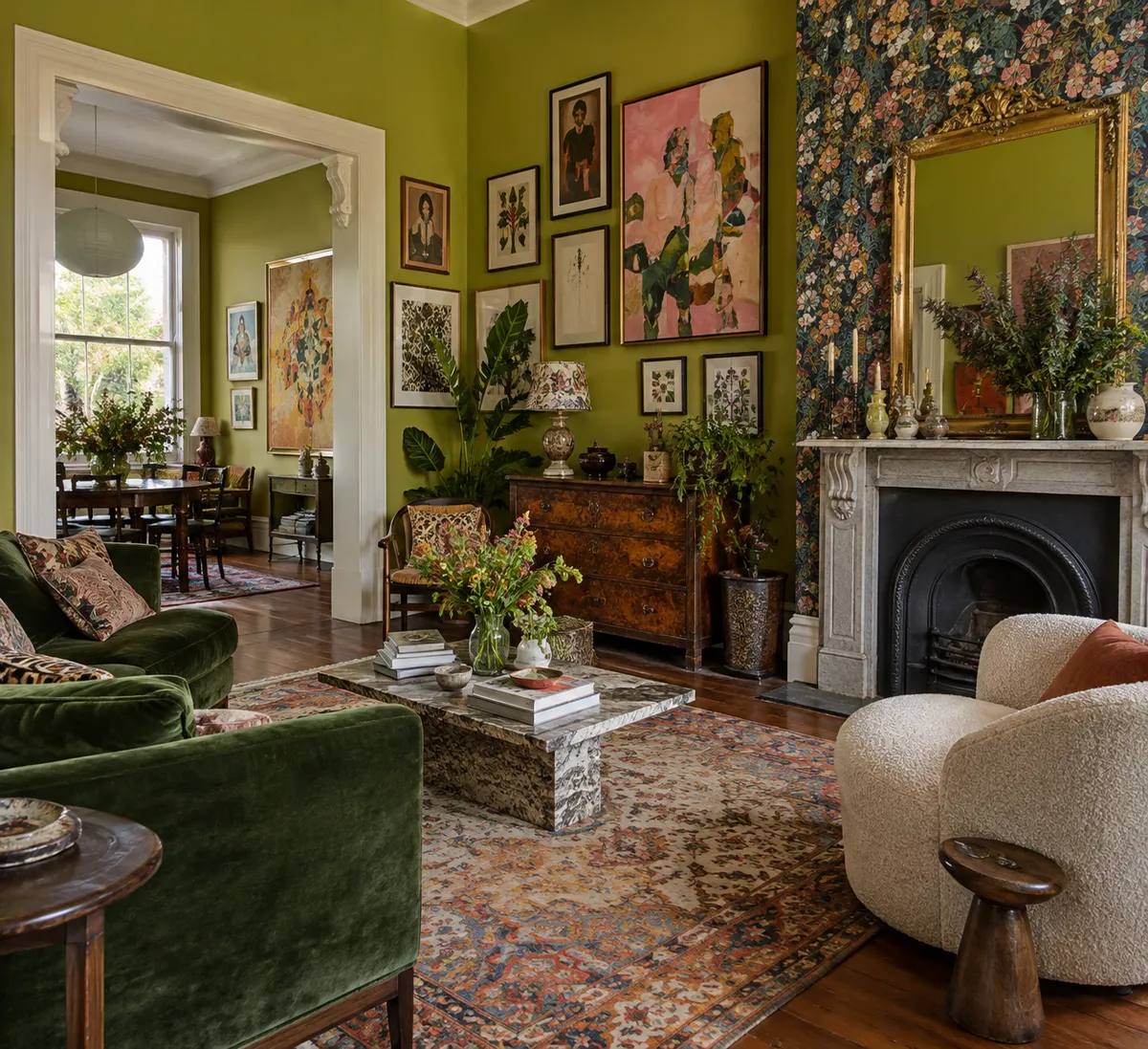
You don't need to knock down a wall to make a boring house feel like yours. Interior designer Alexandra Brownlow shows how in her Melbourne townhouse, a bland 1990s semi that she turned into a richly layered, art-filled home, as reported by Homestolove. Her approach leans on colour, pattern, antiques, contemporary art and English country-house references rather than structural upheaval.
I'll stick to what the report supports and translate it into steps you can use in your own place, whether it's a rental-friendly tweak or a weekend project.
Decorate First, Demolish Later
The most useful idea here is the "ugly duckling" approach: take a plain, characterless house and work out what decoration alone can do before you reach for a builder. Brownlow's home started as a standard 1990s semi, and the transformation came through layering rather than rebuilding.
Try this in your own home:
- Live in the space for a few weeks and note what actually bothers you (light, colour, emptiness) versus what you assume needs renovating.
- Fix the cheap things first: paint, wallpaper, lighting, art.
- Only then decide whether a structural change is still worth the money.
You may find the room was never the problem. It was just blank.
Let Colour Do the Heavy Lifting
Maximalism is gaining momentum as a reaction against minimalist, beige interiors, and colour is its clearest tool. Chartreuse is one of the shades associated with this home, and it's a good example of how a single bold hue can change a room's whole mood.
If a full-room commitment feels scary, scale it:
- Start small: a hallway, powder room or the back of a bookcase.
- Test big swatches: paint a large sheet of card and move it around the room through the day.
- Pair it with something familiar: a bold wall looks calmer next to timber furniture or antiques.
Use Wallpaper as a Statement
Pattern is part of what makes a maximalist room feel layered instead of flat. A statement wallpaper gives a plain room a point of view fast, and you can limit it to one wall, a nook or a ceiling if you want impact without overwhelm.
The country-house link matters here. English country-house style is built on pattern and a sense of accumulated history, so a traditional-feeling print can make a modern shell feel older and more settled.
Build an Art Wall That Feels Collected
The home is described as art-filled, with contemporary art playing a major part. The lesson isn't to buy expensive pieces. It's to hang art with confidence and let it crowd the walls a little.
A few practical habits:
- Group pieces tightly rather than spacing them out evenly.
- Mix sizes and frames so it looks gathered over time.
- Include pieces that mean something to you, not just pieces that match the sofa.
That last point is what separates a curated home from a showroom. The current appetite is for interiors that feel storied and emotional, and personal art is the quickest route there.
Mix Antiques With Contemporary Pieces
Brownlow's home pairs antiques with contemporary art, and that contrast is what keeps traditional style from feeling like a museum. An old piece gives warmth and history, while a modern painting adds tension and energy.
To try it without a big budget:
- Hunt for one good secondhand piece, such as a chest, mirror or side table, and give it a prominent spot.
- Place something modern or abstract directly above or beside it.
- Add personal objects on top: books, ceramics, things with a story.
This is also the eco-friendly angle. Buying and reusing older pieces keeps furniture in circulation and gives your rooms character that new flat-pack can't.
Bring Country-House Charm Into a City Home
The appeal of this house is that it feels like a lived-in retreat despite being a city townhouse. You can borrow that feeling without owning a manor:
- Layer pattern: florals, checks or stripes alongside each other.
- Choose heritage references: antique furniture, traditional prints, collected objects.
- Prioritise comfort: a home that looks rich but feels stiff isn't doing its job.
A Quick Plan for This Weekend
Pick one room and give it three moves: one bold paint or wallpaper choice, one tight gallery of art, and one antique or secondhand piece with a personal object on it. Live with it for a month before adding more.
The real takeaway from Brownlow's townhouse is permission. Start with the plainest room you have, and make one confident, colourful decision there today.