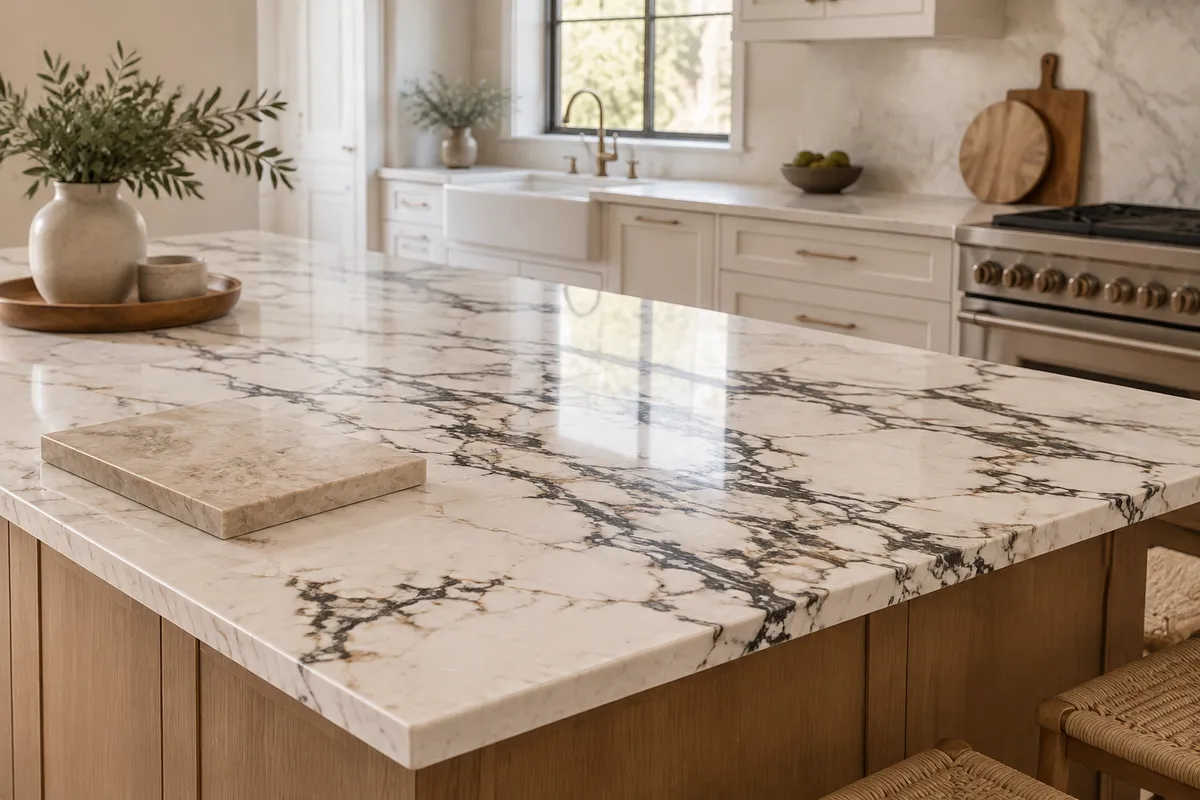
Countertops are the biggest visual anchor in a kitchen, and they're also one of the most expensive things to replace. That makes the choice high-stakes. Here's a practical way to decide whether your current surface is worth keeping, or whether the one you're about to buy will still look good years from now.
A recent piece from The Spruce rounded up six countertop styles that designers say feel dated in 2026, including one the outlet called surprising. The source summary I have doesn't spell out the full list of six, so I won't guess at which styles made the cut. What it does make clear is the direction of travel: kitchen design is moving toward more timeless, natural, and personalized materials, as homeowners think harder about long-term value when they renovate.
That shift is useful on its own. You can use it as a filter, whatever your counters are made of.
Why "dated" matters less than "dated to you"
The Spruce's framing is that some once-popular looks no longer fit modern interiors. That doesn't mean they're ugly or broken. A countertop that was the height of style when it was installed can start to read as a snapshot of its era.
That's worth keeping in mind before you rip anything out. A dated counter in good condition is a style problem, not a function problem, and style problems often have cheaper fixes than a full replacement.
A quick test for any countertop you're considering
Since the trend is toward timeless, natural, and personalized, run any material through three questions.
Does it look like a trend, or like a material?
Surfaces defined by a single loud look tend to age fastest. Materials people choose because of how they feel and wear usually last longer. If your first reason for picking a counter is "everyone has this right now," slow down.
Does it feel natural?
Designers are leaning toward natural-feeling materials. Think about texture, subtle variation, and the way a surface looks up close, not just in a showroom photo. Ask to see a full slab or a large sample rather than a three-inch chip.
Does it say something about you?
"Personalized" is the third piece. A counter that suits how you cook, the finish of your cabinets, and the character of your home will outlast one chosen to match a catalog image.
What to do before you commit to a replacement
A renovation is a long-term bet, so treat it like one.
- Look at your counters in daylight and at night. Some finishes look great in one and flat in the other.
- Separate condition from style. Chips, stains, and cracks are reasons to replace. "It feels a little old" might be solved with new cabinet hardware, a fresh backsplash, paint, or lighting.
- Collect three samples and live with them. Put them on your existing counter for a week. Spill coffee on them. Set a hot mug down on the edge, if the sample allows it.
- Think about resale, but not too much. Neutral, natural-looking surfaces are the safer choice if you might sell. If you're staying put, you have more room to choose something that's yours.
- Ask your installer what they're seeing. Professionals who handle kitchens every week notice which materials clients regret.
Budget-friendly ways to freshen a dated counter
If your counters are sound but feel stuck in another decade, you may not need to replace them. These are options to weigh, not guarantees from the source:
- Change what surrounds them. A new backsplash, updated cabinet pulls, and better lighting can shift how a counter reads.
- Clear the clutter. Dated surfaces look more dated under a pile of appliances. Keep out only what you use daily.
- Add natural texture. A wood cutting board, a stone mortar, or a ceramic crock brings in the natural feel designers are favoring, with no installation cost.
- Reserve the splurge. If you can only replace one section, such as an island, put your money where people look first.
What your counters say about your home's age
Because popular materials cluster in specific eras, counters often act as a timestamp. That's not a flaw. Plenty of homeowners lean into a home's age on purpose. The point is to make it a choice. If the surface fits the character of the house and you like it, it's not dated, it's established.
Check the full list before you buy
If you're deep in planning, read The Spruce's original roundup to see all six styles and the designers' reasoning. Then compare it against your own plans. If your dream countertop shows up on that list, it doesn't mean you can't have it. It means you should ask yourself whether you love it or whether you're simply used to seeing it.
The takeaway: before you spend a dollar on new counters, bring home samples of two or three timeless, natural options and live with them for a week. The one you still like on day seven is probably the one to buy.